3. Starter Detectors On Test
Pages 18–24
Let’s talk detectors! This is the item on the top of your shopping list and the one that is most essential - and most expensive - for your new hobby. Like cars metal detectors come in all shapes, sizes and budgets; you can buy one new for as little as £50 or as much as £3,000! The choice you make is important as this will determine if you become a regular detectorist, or just play with the machine for a bit and then put it in the cupboard and forget it. We want you to succeed and enjoy our hobby to the full, so it’s better if you get this purchase right first time and avoid wasting your hard-earned money! We are therefore going to concentrate on the area of the market, which concerns the more basic and cheaper models that the majority of detectorists start out with. However, we are going to ignore the “toys” and will look at serious machines that should serve you well for some time, and find things too! We are writing and testing the machines in April 2012. We wanted to check different makes of machines that newcomers to the hobby could buy with a certainty that they were suitable and affordable. Taking only one machine from each manufacturer, we could only come up with a few in the £200 maximum price range. So we have added some second-hand machines, under £200 to the list that are available and selling this month on websites and in Treasure Hunting magazine. There are many places that a detector can be bought. To look at a few:-
- Brand new, or second hand from a dealer in the UK
- Brand new directly from the manufacturer
- Second hand from an advert in Treasure Hunting magazine
- From one of the web auctions such as e-Bay
- A car boot sale
- A person down the pub
- Some large stores that sell lesser known makes
Just a word of warning. From time to time machines are stolen from dealers and will find their way onto the open market. So if you are
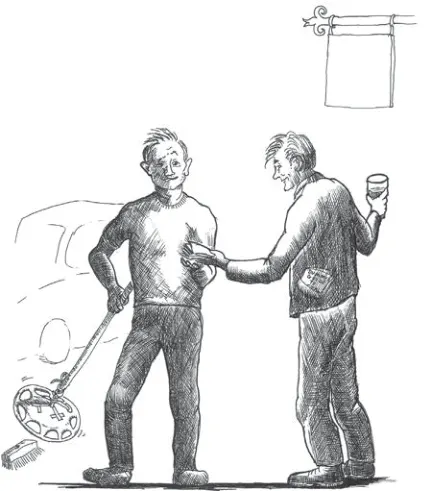
offered a brand new machine from an individual who you don’t know, and for a price way below what you might expect, then be wary that you are not about to receive stolen goods!
In this chapter is a list of a few detectors that we have chosen from the vast array on offer. In our view all of these seem suitable for anyone new to the hobby; but the list is not complete and we are not saying that other detectors wouldn’t be just as suitable. We just had to make a limited selection amongst those that were available to us! We have tried to include some of the more wellknown “starter” machines that you will see advertised although any list is, sadly, out of date as soon as a new machine is released by the manufacturer. A decent new starter detector should cost between £120 and £200. This might seem a bit high, but with the technology that is incorporated in these modern machines, and the quite high resale value, we think this is good value for the money when you are beginning. We have also put in a couple of second hand machines, which are available at the moment for about £200. If you would like a slightly cheaper option then possibly a second hand detector might be better value. I have bought three second hand machines over the years and normally, as long as a machine looks in good nick and it is working fine when you buy it, you don’t seem to get much trouble later on. I have found over the years that detectors seem to go on for ever - I still have two quite old ones that still work very well! The criteria we have used to look at these models are:-
- Reasonable cost
- Easy to assemble
- Easy to use
- Ability to find target items on test
- Quality of pinpointing
- Weight
Testing the Detectors

Normally, when you read about test results of machines (in magazines, for example) the tester takes them out on to one of his fields and sees what they can find. This is a good working test, but every day is different and every field is different; also, how you detect each day can affect the results. So, in contrast, we decided to be a little more systematic with our testing. We laid out three test beds in grass with each machine only tested against these. This was to ensure that the benchmark was always the same and results would be as fair as possible. The test bed was laid down over six months before the test, so the ground was as near as possible to the conditions you will find in a field (albeit with the grass being a little shorter, due to my mower, than you normally will encounter on a farm!) Each line of buried objects was then marked out with white tape. The tests were:-
- Six typical “finds”, all at a depth of 6 inches
- Eight “finds” increasing in depth from 2–9 inches
- Eight identical aluminium tokens increasing in depth from 2–9 inches
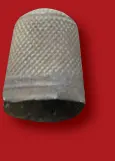
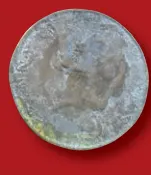
Each of us tested each machine independently, and we then averaged our findings. Each machine was used in accordance with the manufacturer’s instructions and no attempt was made to adjust the settings more than necessary. Our reason for this was that this is what you would expect to do as somebody new to the hobby. For the first test we included a couple of coins of different sizes, a lead weight, a small buckle, a button, and a thimble. All of these common test items might be in the finds bag of the average metal detectorist; and at the depth range for any particular object where
you might expect to find it with a reasonably-priced starter detector. The prices quoted were about average across the retailers. You will find higher and probably lower; it depends where you shop, and the offers that are on at the time. We intended to check basic machines. For this we are indebted to Mark and Luke of the once excellent detector dealership Joan Allen at Biggin Hill for allowing us to borrow some of the machines with no financial incentive at all.







Detectors Tested
We were pleasantly surprised at the results obtained, as both of us were used to handling more advanced detectors. On the whole, these basic models gave quite good performances in the tests we put them through. In alphabetical order, here is the list of the detectors that we looked at:-
- Bounty Hunter Tracker 4
- C.Scope CS1MX
- Fisher F2
- Garrett Ace 150
- Minelab X-Terra 305
- Tesoro Laser B1
- Viking 30
- Yellow Joan Allen detector
Before we include any comments, please bear in mind that this is the personal opinion of the two of us; other experienced detectorists might well disagree. We have not received any inducements from manufacturers to favour their machines. We put all the machines through their paces and, in the end, came out with three
“best” machines. This rather surprised us as they seemed to be clear of the competition! During testing we were bearing in mind that beginners would not know a lot about how to ultimately “fine tune” detectors; we therefore avoided doing so. The results are listed below, in no particular order.

The Minelab X-Terra 305 is a good-looking machine with maroon trim, and is powered by four AA batteries. It is more expensive than the others, but we included it as it is Minilab’s “entry” machine. You could find this, second hand, at about £200; it performed reasonably, but not exceptionally. Surprisingly, for two experienced Minelab users, we did not find the controls intuitive. Points scored - 6 out of 10
The Tracker 4 runs on two PP3 batteries and comes in Bounty Hunter’s distinct shape. You can find this model in most dealers for about £145. It is a decent performer, but no more. Points scored - 6 out of 10
C.Scope were pleased to send us their CS1MX by return of post. It is the most basic of their machines, and looks it; but it is very easy to use. It is a motion detector, which means you have to pinpoint the target while keeping the head moving, but this was not a problem. It’s powered by one PP3 battery. This was an excellent starter machine, both lightweight and effective at picking up signals. I personally would be very happy to recommend it to anybody. Points scored - 9 out of 10
The Fisher F2 is both good looking and well laid-out, with gold and black trim. It runs on two PP3 batteries. We liked this one a lot and we felt it performed well above its price range. Points scored - 9 out of 10
The Garrett Ace 150 despite its bright yellow colour looks and feels like all the higher end Garrett brand models. This one has no pinpoint mode, but the Ace 250, which is slightly dearer, does have this facility. However, it is light and very simple to master, with a beautifully intuitive display. This is another excellent starter machine, particularly for its low price. Points scored - 8 out of 10
The Viking 30 is a basic looking machine, in green and black trim and powered by one PP3 battery. It is simple to operate, and did reasonably well in the tests, but it is heavy on the arm and rather cumbersome to use. This is a British company and we both really wanted it to do well – sadly it was a disappointment, although we know that dedicated users might disagree. Points scored - 5 out of 10
The Tesoro Laser B1 is a classic machine that stills produces the goods; the control box is hung underneath the hand grip unlike most modern machines where it’s on top. The underneath positioning doesn’t matter as there no display to look at anyway. This machine might not have the most up-to-date technology in it, but it showed what it could do in the harder tests. There was one being sold at the time of testing second hand at £150, and it makes the point that you don’t have to buy a new machine to start the hobby. Points scored - 8 out of 10

The prototype bright yellow box is a very basic-looking machine that will soon have the Joan Allen name on. It’s from China, and it’s powered up by two PP3 batteries. It did quite well, finding as much as the others and in some cases a bit more. It has a rather old fashioned display needle that seemed a bit erratic, but we are told that this might not be used in the final version. Points scored - 6 out of 10
Conclusions
So what did we find? Any metal detector can spot an old penny on your lounge floor, but not all can find it if it’s 6 inches down. Some of the detectors tested missed targets 4 inches down but gave a good signal on another item 6 inches down (i.e. it might miss a button or thimble but find a deeper buckle; this is all to do with shape and metal content, and coil configuration, frequency etc. of the detectors tested). The major manufacture’s models, which we have listed, did well enough as starter models. If, in your wisdom, you do decide to bypass all the starter models, then get some advice from a good dealer - if possible in the shop. Try out a few different types, and compare how they handle. Most dealers want the repeat business of when you upgrade, and the word of mouth recommendations. But, to be honest, some of the machines we tested are so good, and so simple to get going with, then why would you want to buy anything else? So think about:-
- Get advice from somebody experienced in the hobby.
- The weight of the machine. This is important after a couple of hours in the field!
- Is the detector easy or complicated to use?
- Pinpointing — does it work at depth?
- The total cost of your new detector. Are headphones, coil cover, and rechargeable batteries included in the package?