Organisations, Clubs and Dealers
Pages 25–28
After you have bought a metal detector, or even before, you are going to have to decide how you are going to carry on with the hobby. Are you going to detect alone or would you prefer a partner? Would you like to join a nearby club? The one thing you do need is insurance for civil liability cover; this is not for your house, car or dog, and it will not cover you if the river floods and your garden is turned into a lake! No, this is insurance to cover you when you are detecting, just in case somebody sues you because you left a gate open and the escaping cows caused an accident; or a horse broke its leg, because you left an open hole, and ended up being shot. The cost of membership is currently £8 per year, with multi-year options available for £15 (2 years) or £22 (3 years). Membership can be arranged through the NCMD and includes civil liability insurance cover for metal detecting activities.
I have always thought highly of the NCMD, and what it does for detectorists. I believe it provides good value for what you pay as, apart from the insurance, you receive the full back up of their expertise, and experience. The NCMD is the official “voice” of metal detecting. They represent the hobby and argue its point of view with museums and governments alike. Each member of the National Council has been voted on by the regions that cover the whole country, and each of these nine regions is made up of clubs in any one area. The clubs themselves are made up of like-minded people who come together to talk and show their own finds. The regions are run by representatives of local clubs. Each region runs itself and elects its own committee, and two of these become their region’s representatives on the national council. Some regions are better than others for organising events for their members, but

these could include display days at museums, farming events, or even days out detecting. The NCMD has worked hard, since the late 1970s, to ensure that we can legally continue detecting. It regularly meets with Members of Parliament, and helped shape the legislation that brought in the PAS, and the 1996 Treasure Act. So do you need to join a club to get all these benefits? No, you don’t, but in my opinion you get more value for your money if you do.
Metal Detecting Clubs
Detecting can be quite a solitary experience. I therefore think that there is nothing better than going to a club meeting where you get to talk to people about what they have found lately, and to be able to show your finds to others. You can also use these meetings to have your finds identified, and recorded on the national finds database run by the PAS. You will also pick up tips from other detectorists. The FLOs who attend some meetings can also advise finders about an item that might be Treasure under the Act. At our club (Trowbridge MDC) the meetings are always well attended, and very lively. We run competitions for the best coins and artefacts found each month, which encourages people to show and enter their finds. This is where you learn about objects and get to handle things that you might otherwise never see outside of a museum. Photos are taken for our website www.tdmdc.co.uk which then allows anybody to see what has been found; many clubs do something similar and there are some great websites out there for you to explore. One of the other main benefits for newcomers is that most clubs have access to farmland (“club land”), which means that you always have somewhere to go. Clubs will often arrange days out for members, evening talks or displays of finds for the general public. Some clubs will also own a selection of reference books or equipment that can be lent out to members. Naturally, the quality of a club depends on the drive of its members and that is bound to vary. Popular clubs may well have a waiting list for full membership but still allow you to come to meetings as a guest. You will find them friendly places where experienced detectorists are always happy to help those new to the game. The Trowbridge Club recently arranged, with the Wiltshire Heritage Museum in Devizes, for a six month long display of

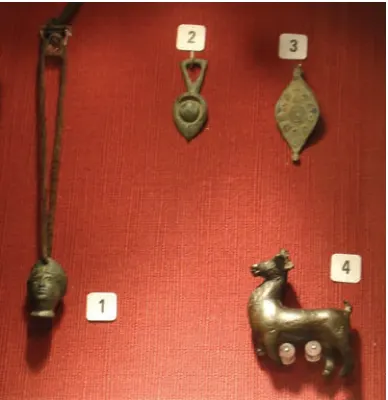
objects which had been found and recorded by club members. We even had a “launch” one evening with wine and refreshments! We all had a great time and got a buzz out of seeing our finds on public display. This was a whole gallery full of metal detecting finds in six display cases, with over 200 items - and that’s not counting the 500 bits of rubbish I collected last year! So, being in a club can give you contacts and opportunities to really make the most of your new hobby! This Wiltshire Museum is bang up to date (well, the Bronze Age wasn’t that long ago) and is well run with some fantastic presentations. It’s in an old building with a maze of rooms where the upstairs floors creak, but that’s all part of its charm. There is a lift for those who need it, and it’s a very child-friendly place. You will find it in Long Street, just five minutes away from the market place or the Station car park (but no Station) where there is plenty of parking in both. This would make a good day out for the children, while you brush up on your knowledge and see some of the many fantastic items which you could be finding while out detecting. You will find their Web site at Wiltshire Museum
Not A Club Person?
You don’t have to belong to a club to get the benefits of the NCMD. They realised that not everybody wants to socialise with other detectorists. You can be completely independent and still have the backup of the National Council. To do this, all you have to do is join as an independent member from the website www.ncmd.co.uk
and you will then get the full colour magazine Digging Deep; the insurance described above, for when you are out detecting; and the same full support that club members get via their clubs. Membership rates and benefits may change over time. Please visit the NCMD website for the latest information.
Dealers & Stockists
There are many dealers in this country who stock and sell metal detectors; you can find adverts in Treasure Hunting magazine, and also on the web. We’ve tried to include a complete list at the back of this book (apologies if we left anyone out). Dealers are normally very helpful when you are buying a detector and, if you can, visit the shop in person as you can see and handle the machines and get expert advice on the model that will suit you (and your pocket!). For more complex machines you can also get help on setting a programme. This is also one of the advantages of joining a club where, perhaps, you can try another member’s particular machine before you order one yourself. Dealers will also sell all the accessories you might want ranging from pinpoint probes to books, and diggers to batteries.
Manufacturers
Metal detectors are made in the UK, America, Germany, and many other countries. As a rule of thumb, I would recommend that you buy a detector (wherever its country of origin) from a dealer in the UK. You could hit problems if you buy a machine that has been imported privately and does not have warranty or repair back-up. There is such a good selection of well-known manufacturers that there is no real need to buy from a non-reputable source, and I list the more obvious firms, and their contact details, at the back of the book. Be very wary about amazing offers on unusual machines quoted in newspapers or anywhere else. Stick to well-known machines bought from recognised dealers, direct from the manufacturer or from individuals whom you trust. Remember the maxim: if it seems too good to be true, it probably is!