5. Where To Search and Ten Ways To Gain Permission
Pages 29–41
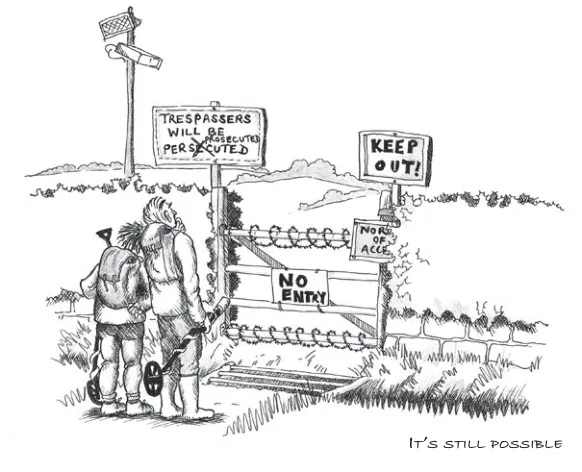
So you have all the equipment you need, insurance from the NCMD, and a detector that has all the technology to send a spacecraft to the moon. But you still have nowhere to go! So what do you do now? This is the hardest part when starting the hobby and it’s also the easiest when you know how; and that is what we are going to show you. So let’s remember what the law, and our Code of Practice, says: “You must have permission to detect on virtually any land in this country.” All land is owned by, or is managed by, somebody. So you have to find a way of getting permission to search it. First a word of caution! Ladies, you need to be extra cautious when trying to gain permission. I always advise our lady members never to detect on their own, and to always let somebody else know they are going, and when they can expect you to return. Nowadays a fully charged mobile phone is also a must - for all detectorists. So let’s look at where, in theory, it’s possible to detect, and how to go about getting permission. So how can you get permission to detect? How do you find somebody who will allow you, a complete stranger, to come and go when you like, to walk across their land, disturb their animals, dig holes, pocket anything you find, and disappear? It’s like you inviting a stranger to come into your garden, whenever they like, make themselves at home, and dig up your flower beds. But it can be done and this is how!
Let’s leave it at 10 (yes, 10!) ways to get permission, as they seem the most obvious. When you look through this list the one thing that jumps out at you is how each sentence starts: “You can”. They are two very small words but by remembering them you have nearly cracked it. You can get permission if you make an effort; there is always a reason for not having enough land to detect on throughout the year. That reason is you, for if you want land you have to work at it. Some people just seem to have the knack, or are very lucky, but most of us find it a little more difficult. When writing to anybody, a stamped address envelope is essential if you want them to reply. Without this, your letter could very well end up in the bin. Whatever method you use, you have to give the farmer an honest statement of how you mean to conduct yourself, by keeping him informed about what you find, and that you have to obey the law in respect of the 1996 Treasure Act. We would strongly encourage you to use the Portable Antiquities Scheme to report your normal finds, but you need to explain this to the farmer as a few might get a little suspicious about it. So let’s look at farmland first, as it tends to make up the majority of land that we detect on.
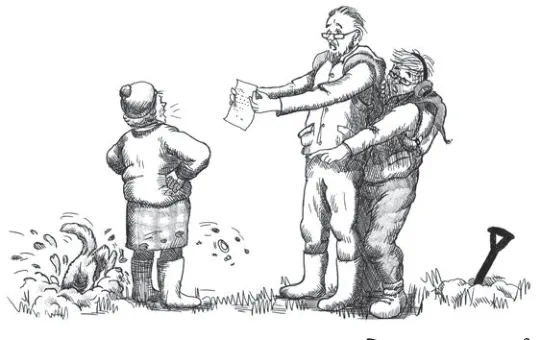
Method 1: You can write a letter to a named farmer If you use this method you have to keep it short and to the point, and always include the essentials: what you want to do; where you would like to detect; when is it okay; that you are fully insured; and that holes will be small and well filled in. With all letters you have to remember that farmers are busy people and receive a lot of rubbish through the post. So your letter must not be long winded, but rather convey a short interesting message to him.
Method 2: You can write a standard letter and send it to lots of farms in any one area The standard letter is really a copy of the first letter, but it should
52 Roman Hoard Rd
Frome Somerset 54A D20 Tel: 52503 52503 Potfull@Roma.co.uk
10 April 2010
Dear Mr. Smith,
My name is Dave Crisp, and I am writing to see if I can ask you for permission to come metal detecting on your land. I am fully insured with third party civil liability cover; no damage is done by my detecting, and holes are always small and well filled in. I do not detect on growing crops, and I always observe the Countryside Code. I am a member of the National Council of Metal Detecting, which is recognised by the National Farmers Union, and I am also completely aware of the law on reporting items that could be Treasure. Of course, I would show you anything that I find that is interesting first. I would like to come and see you to talk about this, at your convenience. I have enclosed a stamped addressed envelope with my phone number and e-mail address, if you would rather contact me that way. Thank you for reading and considering this request.
Yours Sincerely
Mr. D. Crisp
be personalised by naming the farmer rather than “Dear Sir”, and also by signing it personally. This also calls for a self-addressed envelope, but now the costs go up! A sample letter is included above.
Method 3: You can visit a farmer after phoning and getting an appointment Farmers work seven days a week, and are always busy, so to get an appointment you have to be brief, interesting, and persuasive. Before you phone make a small list of what you really need to say. This call is “make or break”. If you get an interview you have normally cracked it. Be on time and keep it as short as possible; cover all the points, and don’t waffle. Let them tell you what they want out
of this; it could be just information about what you find on their farm, or they might want some of the things you find. Farmers are all different.
Method 4: You can cold call (i.e. just visit a farm and hope there’s somebody there) This is a hit or miss way of doing things, but it does work if you are persistent and miss the farmer the first time. I have always found that by seeing his wife, or somebody who works on the farm in advance, you get a feel for how your meeting will go. As with all meetings be prepared, know what you are going to say, and have a short list of points you want to get over. The two points I always stress when talking, or writing, to farmers are that I am fully insured, and that no holes or mess will be left.
Method 5: You can take out an advert in the local paper Placing an advertisement in the local paper might not cost too much, but you have to accept that you might not get any replies or, even worse, replies from the wrong people (there are some funny people out there!).
Method 6: You can advertise on web sites This is a modern version of Method 5, but allows you to say more for no extra cost. The downside is that you need to find a website that farmers regularly read, and you have to catch their eye; but some web sites will allow your message to stay on as long as you wish.
Method 7: You can put an advert in one of the farming magazines This is a direct method of getting your message across to a large number of the type of people that you wish to ask, but this does not mean that you will get more, or even any, replies. The other disadvantage is the large geographical area that you will be targeting, so if you are only going to be detecting in, say a 20 mile radius, you could get your only reply from 50 miles away.
Method 8: You can sit in a local pub and hope a farmer comes in, and then buy him a drink! It is probably one of the most enjoyable methods, but is very hit or miss, and more miss then hit as the night goes on. Hic! But

Method 9: You can get an introduction from a friend, who knows a farmer/ landowner/farm worker/ contractor/a chicken Quite a good method, as long as you don’t live in the middle of London or Birmingham. If you live in a smallish place close to farmland the chances are you know somebody, or that person knows somebody, who knows a farmer, or it might be somebody who works on a farm, or gets fresh eggs or shops at a farm shop.
%uy +im a pint

Method 10: You can stop and talk to a farm worker, as you are driving by This method is quite a good one, but you need to be willing to talk to a complete stranger in the middle of nowhere, and at the same time you have to be able to get your questions across. This is not always such a good way, as you have to be able park your car quickly and sensibly in a fairly convenient place, and be a confident talker. You might also need to drive around country lanes a lot in the hope of seeing somebody just standing there. You should be aware that not everybody standing in a gate way works on a farm, so this way should be used with caution! So we have 10 different ways of talking to farmers, but none of these will guarantee you get what you want, and that is permission to detect on some land. “Why not?” you say! Farmers are the salt of the earth; they are also very hardworking people, educated, and down to earth - sometimes miserable, sometimes happy - just like you and me. They too have good and bad days. So every time is different and remember, it is their land and they simply might just not want anybody there.

Be polite, ask nicely, do not argue, and be prepared to thank them and walk away.
Tenant Farmers
Not all land is owned by the person farming it; if it is rented then you have to have permission from both the landowner and the tenant. This is one where a written agreement could be worthwhile (see “Written Agreements” later on).
Councils
Some farmland is owned by councils, along with parkland and, perhaps, the village green, so it’s a case of writing to explain what you would like and to ask how you should go about it. Councils, land agents, committees etc. all have policies that cover all aspects of how they operate and this will include who can do what on their land. This is what you have to get past. First you have to find out who owns the piece of land, then who manages it, where they are, who you have to speak to, and how to contact them. In this case a phone call into the maze of a local, or district, council office can help to narrow down who is responsible for the administration of the land you are interested in. The key here is not taking the first person’s word that you cannot. Politely insist that you are going to write, asking for permission, and that you expect a written reply stating why permission is not being granted. If you encounter problems you could always speak to your local councillor (their names are normally in the phone book), to find out if they know of any rules, bye laws etc. Remember you are a council tax payer! But don’t just steam in, you might need somebody on your side! As with letters to farmers, you have to keep your request as short as possible, but get your point across. Ensure that you cover all the main points:-
- Fully Insured
- No holes and mess
- No damage, no gates left open
- Knowledge of the Treasure Act
- Reporting possible Treasure
- Member of the NCMD
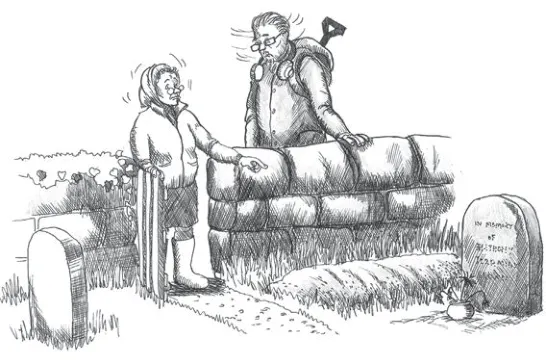
Local Common Land (you know the type of thing - the bit in the middle called the village green, or if it’s in the town it’s called “the common”), is normally run by a local or district council. The Countryside and Rights of Way Act 2000 increased access to common land (referred to as “access land” in the Act) and gave people more extensive rights; but this does not mean you can detect on it. If you do get permission, get it in writing, and carry it with you because, as sure as eggs are eggs, somebody will complain when you are there! Consecrated ground, such as churchyards, is to be avoided; you’re not going to gain permission and it is just a little morbid. A lady did once ask me once if I thought she could get permission to detect in a churchyard; I let her down gently. For non-consecrated church ground the Diocese in your area, that runs churches and church land, would have to be the first port of call.
Mountains, Moors & Hills
If it’s not private land then it’s part of an estate belonging to the council, Crown Estate, National Trust, Forestry Commission, and so is somewhere, somebody’s responsibility to oversee it. Here is where local knowledge comes in. A phone call here or a visit to a local house can pay dividends, to ascertain who owns, or runs a particular piece of land. MOD land is usually out of bounds, although you are welcome to try and get permission if you can! Canal Paths are owned and run by British Waterways, and they do not allow detecting. In the last few years plenty of tow paths have been renovated which has meant the original surface being covered with a good layer of chippings, gravel or hardcore - none of which would help detecting! But as you are not allowed to detect on them, it doesn’t really matter.

Beach Permission
Beaches are like Marmite, you love them or you hate them. But in my view there is no point of going to one without a detector. It is where people have been scattering their belongings for the last 2000 years. It’s just like a field that has been well used on a daily basis; but fields just don’t get washed twice a day. There is nothing better than going to a nice beach on a summer’s day, getting some sun, reading a good book, maybe a swim in the ocean, a bite of lunch and perhaps a little snooze. Then, when other people are packing up and the beach is going quiet, getting out the detector for the real reason for being there. Modern losses are always going to be your main finds, but there is always a chance of earlier lost items. Remember that all valuable finds should be reported, but going into the local police station with a couple of quid’s worth of loose change, is not going to go down well. Buy yourself an ice cream! I know somebody who found a £20 note presumably rolled up for sniffing (seaweed?). It was just being blown along on top of the sand. Keep your eyes on the surface of the beach - you never know. The majority of our beaches in this country are run by the local
council, where blanket permission is granted, alongside all the other activities. But there are a few exceptions to this rule. The National Trust (sadly) doesn’t allow detecting on their beaches, and private beaches seem not to allow it either (although you can always ask!). The Crown Estate also runs some stretches of foreshore and they have a scheme where you can get a permit to detect down to the low water mark. You will find their web address in the address section at the back. Here you can check their maps, and download a permit.
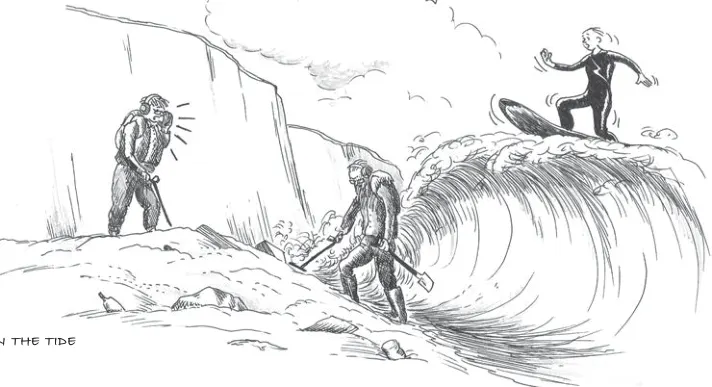
There are specialised (and expensive) metal detectors that are fully waterproofed and are used by undersea archaeologists or “treasure hunters”, but it is probably a little hard to swim and detect at the same time and most normal detectors work perfectly well with the head submerged.
Flotsam, Jetsam & Lagan
You should also be aware of items that you might find on the beach that have been washed in, and what you should do if you find anything. Basically there are flotsam, jetsam and lagan. “Jetsam” refers to any goods that were deliberately thrown off a ship in danger, to save itself. “Flotsam” is goods that floated off the ship, by chance, while it was in danger or when it sank. “Lagan” is goods left in the sea on the wreck or tied to a buoy so that they can be recovered later by the owners. This will all be very handy to know in a pub quiz, so pay attention.
If you find something valuable that has been washed up on the beach, however small, you should report it to the “Receiver of Wreck”. There are hefty fines for not reporting something that is wreck. The Receiver will investigate the ownership of the item, normally while you hold on to it. This could include gold coins, bells and fixtures from a ship. After a year, if they cannot find the owner, it becomes property of the Crown, and the Receiver can dispose of it and, often, the finder is allowed to keep the unclaimed wreck in lieu of a reward. You should also be aware that there are items washed up that are dangerous (e.g. mines, flares, chemicals drums etc.). The current Receiver is Alison Kentuck and the present contact details are in the back of this book along with a copy of the reporting form you should use. In London there is a scheme that allows metal detecting on the Thames Foreshore but you need a licence from the Port of London Authority and on some sections have to belong to the Society of Mudlarks. This is probably one of the most dangerous places to detect if you don’t know what you are doing. When the tide turns, the mud you are standing on can be covered in water very fast, and you can be easily cut off!
Are Detectorist/Landowner Agreements Worthwhile?
So you caught Mr. Farmer in a good mood and he has listened to what you have said and then agreed you can detect. “Just help yourself!” he said, and waved you off.
- Should you have some sort of agreement?
- Should it be verbal (as it is now) or be written down?
- Is it worth it?
- Will he be offended if you ask?
- What if he says no?
- What happens if you find something good?
- What happens if you find a hoard of Roman coins? (I did)
- Will he deny giving permission?
What does the law say? The consensus is that it is better to get permission in writing. But every time you get permission it’s different; it’s a different farmer, and different land, so you have to make up your mind at the time or come back and bring up the subject. Presumably you have already talked about the points mentioned
earlier, and he has marked your map to show where you can go. Now comes the tricky bit: ask if he would like a written agreement showing who you are, where you live, and what would happen to any finds that you might make. He might welcome it, or he might just say no, or ask why. Here you have to be a bit of a diplomat and mention again about the Treasure Act and the reporting of items that fall under it. You do not need a written agreement and, although it has its advantages, I have never had one and, up to today, I have never had any trouble. But I always make it clear how we stand. I do all my agreeing face to face, and I always send them a letter thanking them for permission, and restating all the points that we have discussed. A copy of the NCMD and National Farmers Union written agreement is printed at the end of the book. This can be used as a base agreement, and altered to suite yourself.
“I am a great fan of the Portable Antiquities Scheme. It has a tremendous ability to engage all sorts of people with an interest in archaeology, including those who find objects and those who want to learn about them. I’d like to pay tribute to every one involved with the scheme, especially its finds liaison officers and the many people who have promptly and properly reported their finds. Thanks to them we can all experience something of the thrill of discovery and learn more about the past.”
Ed Vaizey Culture Minister 2011
Scheduled Land
This is land that has been marked by the government to legally protect and conserve it. These sites are designated by the Secretary of State and this means you cannot detect on them. Even archaeologists have to get written permission to do digs of any sort. How do you know if it is scheduled? Well, you have to find out. Some places are obvious, like Stonehenge, but some are only marked on maps, if at all. Some libraries will hold a copy of a list, but it’s not necessarily up to date. Your Finds Liaison Officer might be able to help and, of course, the farmer or landowner should know; but remember they cannot give you permission to go on that land. If you do find a Scheduled Monument then walk away; there’s plenty of other land out there. So there you have it. You can get permission, but not always for your first choice land, and it’s not always easy. But there is plenty of
land available, and if you do get refused, don’t argue and don’t curse if you are sure it’s a “No”. Just politely thank them for their time and walk away. If it’s a council type of refusal, and it is policy, then it’s probably written in stone and you will not have much chance of changing it. If it’s a vague “No”, and nobody can tell you where it’s written down, then challenge it. You never know what you can do till you try, so good luck! But remember, it’s up to you!
Farmers & Landowners

They come in all shapes and sizes, good, bad and indifferent. They can be very helpful, indifferent or downright stubborn with you, but in the end you need their cooperation and trust if you want to detect on their land, or even to get past the front door. They are normally down to earth, practical, helpful, and sometimes even interested, but they are always busy. This is one of the good farmers, Neil, with some of his Montbeliardes milking cows. Note he’s happy, and that these Montbeliardes cows look different from the Friesian shown in the next chapter. Neil’s cows are bred for high quality milk and with heifers and male calves matured for high quality beef. (Roast beef served slightly pink, with Yorkshires. Mm, sounds good) Sorry, I digress. The fact is farmers are just like you and me; they have good days and bad days; some are the salt of the earth, and some should be under it. So, when you get permission, respect their wishes, their land, the crops, and their animals. Take every opportunity to talk to them and their family members. Always remember the kids: I am still detecting on farms, now farmed by the kids I met there 20 years ago. Always show your finds if they seem interested; some are very interested, and some don’t want to know. Some will believe you won’t find anything; show them that there is always something of interest. Get a copy of your PAS sheets and make up a folder of the farm finds for them. If they seem to really like an item, be generous and let them have it. Think about making up a small box of selected and labelled items and present it to them. It will pay dividends in the long run. Always remember we have this hobby only because of their generosity.

Also, remember that if you have the permission of a tenant farmer, then you also need the permission of the landowner. It can cause a lot of problems later otherwise. It’s a nice gesture if at Christmas you gave your farmer a bottle or two, even if you haven’t found anything, and a Christmas card wouldn’t go amiss. (Make sure they know who it’s from.)