Metal Detecting Land
Pages 52–59

In this chapter I am going to look at the type of land you are going to find when you go through that farm gate. You have to remember that these are working farms and the fields, on that particular day, are as they are for a reason. For us, farmland is basically divided into two sorts: arable (growing crops) or pasture (grassland). Farms can be one or the other, or a combination of both, and the mix can change from one year to the next. From John O’ Groats to Land’s End, from Bangor to the Wash, different crops are grown, and different farming practices are used. The type of soil, the weather, and current food prices all play a part in a farmer’s decision as to how his land should be used. You need to know exactly when the best time to go to certain farms is, and when you should avoid getting in the farmer’s way! It all depends on the crop cycle, and the time of year.
Arable Land
Let’s take arable land first, which just means that crops are grown on a regular basis. So each field will change with the seasons, and you will get a wide variety of different land conditions. Arable crops grown in Britain could include barley, wheat, maize, oil seed rape (the bright yellow fields in April/May), potatoes, peas, sugar beet, beans, turnips, swede and, no doubt, many others. In the last few years a few more exotic crops have crept in, such as elephant grass, which is used to power small heating systems on farms (and some is even grown to fuel power stations). Not bad for a crop which is really just grass! Mind you, it does grow 12 feet high and is impregnable to almost everything except birds!
“The high number of finds recorded is testament to the tremendous success of the Portable Antiquities Scheme and the Treasure Act, and I am delighted that we have been able to agree new contracts with all the partners in the Scheme, so the current posts will continue. The finds reported though the Portable Antiquities Scheme and Treasure are changing our understanding of the past, helping archaeologists learn where people lived and died, and how these finds were used. But what is truly exciting, is that these finds are being made by the public not (in most cases) by archaeologists, transforming the archaeological map of Britain.”
Neil MacGregor, Director of the British Museum
The Arable Year
So we come to what happens on a farm that grows crops during the course of the year. We have to start somewhere, so let’s start in January when most of the land is dormant (i.e. nothing is really growing, but some fields could contain a crop that was sown in the previous autumn, such as winter barley). On some of your fields you might have the stubble from last year, as this is left to rot and ploughed back in to help improve the soil’s fertility. When the fields are left like this it gives you a whole winter in which to detect and, as the stubble rots and softens, the conditions just get better. Sometimes the field is ploughed at the end of the year. This allows the weather to break down the farrowed soil, and makes the next job (harrowing) a lot easier. However, this is only normally done if the farmer has the time. When a field is just ploughed and left, it will gradually get better to detect on as the months progress. Some farmers just leave it until about March and this will give you a few more months to detect. Early in the year (March or April) a famer will, as soon as possible, start to prepare

his fields by ploughing, dicing, harrowing, and rolling. All this has to be done before he can plant his seeds for the next harvest to grow. Basically he ploughs the field to turn in last year’s stubble (what’s left after harvesting), and the muck that he has spread over it. This is all the waste products from the cattle, and the extra that he has been keeping in a slurry pit (a mixture of cattle dung and straw bedding from the cattle sheds). This is all sprayed on the land before he ploughs it in. Sometimes the muck will be gradually spread over the winter months. Therefore, if you go out in this, remember to scrape your boots before going home. He will then use a dicer, which is a very large set of stainless steel blades, to break down the turned earth into smaller pieces. He might then do it all again the other way across the field to break it down even further, or he might use the “ram” or rollers. These are like large heavy rolling pins, dragged behind the tractor to flatten the ground. At this time, depending on what crops he is growing, he might also spread pellets of fertiliser. This is a good time to get some detecting hours in! Otherwise he will plough, disk harrow, and seed the field all in one go and, from when he starts, you will be amazed at the speed that he can turn stubble into seeded land. All this work has to be done to provide the correct growing environment for the seed to sprout and grow easily. If he is lucky, he will have all of this ready just as the weather is warming up the soil, to help the plants. So when the conditions are right he seeds, and maybe rolls it down flat with the ram to firm the soil. Now at this point he might allow you to detect, as you really cannot do any harm. However, once the seed starts to sprout you have to check again, as some farmers will allow you to search in such conditions and some, with a vengeance, will not. At this
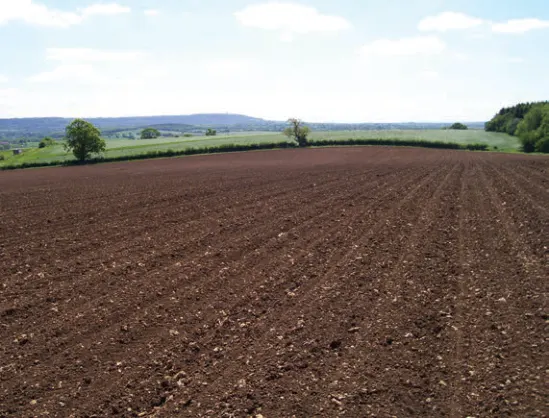
time of the year the conditions are perfect for detecting as the land has been ploughed and rolled firm and flat. This is just about as good as it gets for us! Walking across the field now, you feel like the ginger cat from next door on the seed tray in your greenhouse! So from early in the year the field is growing until harvest time and this, depending on the crop, can be from late July (starting with the rape) through to September (with maize).This will also depend on the weather. Farmers hate to harvest wet crops as they have to spend good money drying them off. I organised a rally in 2008 and that year there was so much rain the crops were about four to six weeks late. I was lucky there was a dry spell the week before the rally, and most of the land was cropped and available on the day; but it was a close run thing! However, both the farmer, and therefore us, are dependent on the weather; him for his living and us for our hobby. Sometimes a bit of rain will help us, as damp soil gives us a better signal response than dry conditions. On some farms winter wheat (barley), is sown in late August or September to give it a head start before the winter arrives. This crop will then just stop growing and start again as soon as the weather improves in the spring. This winter crop gives the farmer a head start and should give a crop three to four weeks earlier than normal and it allows the farmer to spreads things out at his busiest time of the year. Of course, this means that throughout the winter these fields are out of bounds to you, but it’s harvested earlier in the year so that’s a bonus. As soon as the crop is harvested, it’s time to get out there as Mr. Farmer doesn’t hang about. Some crops can now be drilled straight into the ground, with a minimum of preparation or, if you are luckier, it could be left until later. Every farm is different and every farm can change its cycle from year to year. Years ago, land used to be left fallow (just not used) and this allowed animals to graze to improve the soil; but now we have fertilisers, man-made and natural, to do this job, so allowing all the land to be used every year. There are certain crops that are grown just to improve the soil.

These are grown quickly and then ploughed in and, as they break down, they release nitrogen back into the soil and so improve the growing quality. This might give you another small window of opportunity. Added to this, farms generally change the crop cycle to stop bugs and disease taking hold, so after this year’s maize the farmer might put in potatoes or wheat next year, and this will change your detecting cycle again. So basically knowing what is going on in the farm can help you plan your year, and how to make the best of every opportunity that might arise. Weed control and fertilising can happen at any time, on any of the crops. So, if you see a tractor driving across a field of crops spraying liquid or solid pellets, don’t assume you can detect - he has to be there, you don’t. All of these times are a guide, as climate change over the last 10 years or so has meant work on the farm has started earlier and earlier each year. This, combined with modern technology and more sophisticated and resistant crops, has led to a marked increase in the length of time land is unavailable to detectorists. So with all the land types you might encounter, I am just going to list the fields in my preferred order. This might not be everybody’s cup of tea, but these are what I prefer. With a good mix of types you should be able to detect right through the year!
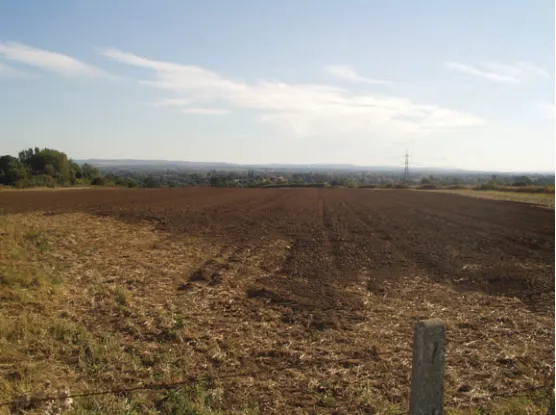
- Ploughed disked, seeded and rolled field
- Maize seedlings growing
- Last year’s barley/wheat stubble
- Freshly ploughed and rolled earth
- A harvested potato field
- A field ploughed and disked
- Maize stubble from last year
- Maize stubble new
- Freshly ploughed land
- Rape stubble (good for nothing)
There are of course other types of detecting fields in different parts of the country. Rape stubble seems to be God’s idea of a joke on us detectorists; not much is grown by my farmers, but when it is I just stay away as it’s resilient to everything except the plough. Just walking through it can be a hard work!
Non-Arable Land
With non-arable land (that’s grass to you and me) you don’t get so many different conditions - but you do get different types, and length of grass from sheep lawns to thick well growing tussocks which are just not worth trying. In winter most grass stops growing, so it tends to be shorter, and you have a good few months to detect.Also at this time of the year, you don’t get cattle out as they are normally in the sheds. Most of the time, early in the growing season, grass will be allowed to grow with no animals on it; this is grown long for silage. When it’s a good length Mr.Farmer will mow it and then allow it to dry in the field for a while then bag it into the large round black bales that you see in the fields.This will then be fed to cows later in the year. While it is laying drying on the ground in long rows it’s a good opportunity to get out as he will always cut it as short as possible.This will give you long wide stretches to walk down; just perfect on a nice spring day! In the spring and summer grass that has had cattle on is fine to detect on most of the time, but you do have to watch where you put your feet! Fields
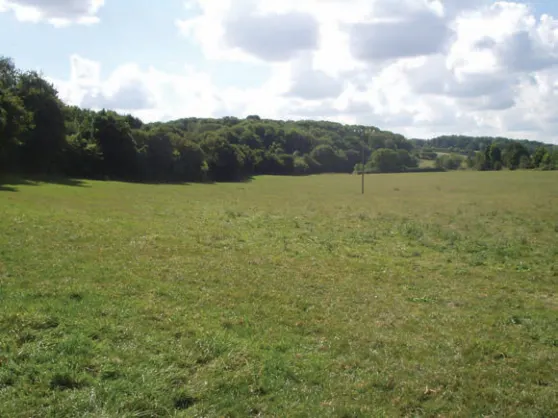

with sheep are really excellent; in fact they are as good as a fleet of lawnmowers and have more benign toilet habits! Also sheep have a tendency to move away from you, where cattle are much more inquisitive, and can be a nuisance, to say the least. Always check with the farmer before you think about detecting in a field of cattle as they can be very unpredictable. In a cattle field, one eye should be on the ground, and the other one on the cows. If you have a third eye that would be useful, as it could watch your back. As with all animals you can become complacent very easily; there are many stories where even farmers have been maimed or killed because they thought they knew their animals, and took them for granted. With cows on the farm you can get bulls as well. Some farms raise them from calves to sell on. Think is it worth going in that particular field? Let’s talk bull - no, not this writing, but the big thing with horns on! I bet he can run faster than you and, as it’s his home turf, I personally think he has an edge. I plan never to challenge him to a race! Remember he can be very dangerous. You might also encounter horses, pigs, llamas, goats, alpacas, even bison; you never know what is going to be breathing down your neck! I have never tried detecting in a pig field (with or without
them in residence) and I cannot imagine what it would be like. I was invited once, but I declined so if you ever go, please let me know what it was like - that is when you have had a wash or two. Grass tends to stay in for about five or six years, then it will be ploughed in and then reseeded, or a completely different crop will be planted.
Footpaths
Footpaths are an integral part of the British countryside: they go together like fish and chips, like Yorkshires with roast beef. They cross the fields of Britain like a lace pattern. They have been essential for getting around our countryside for hundreds; maybe thousands of years and in this time people have dropped a multitude of items crossing from one field to the next. If you have one on your farm work it well, not just in a straight line; include both sides as they have moved over the years for all sorts of reasons, and the plough has moved more soil and finds than you can imagine. But always remember: if you don’t have permission to detect on that field you have no right to detect on that public footpath. You only have the right to cross the field, nothing else.
Quick Breakdown
So from early in the year you will have last year’s stubble; then ploughed and rolled land, ready for seeding; then land being got ready for potatoes and maize. By this time the winter wheat is growing well, and the spring cereals are starting to sprout and the maize is going in earlier ever year. By July some rape crops are ripening well, and are soon out, with that year’s crop following on. By August/September it’s all hands to the pumps, and stubble is appearing everywhere, with maize coming along last. A quick plough and some fields are soon seeded. Grass can be available all year, but can sometimes be too long for detecting.